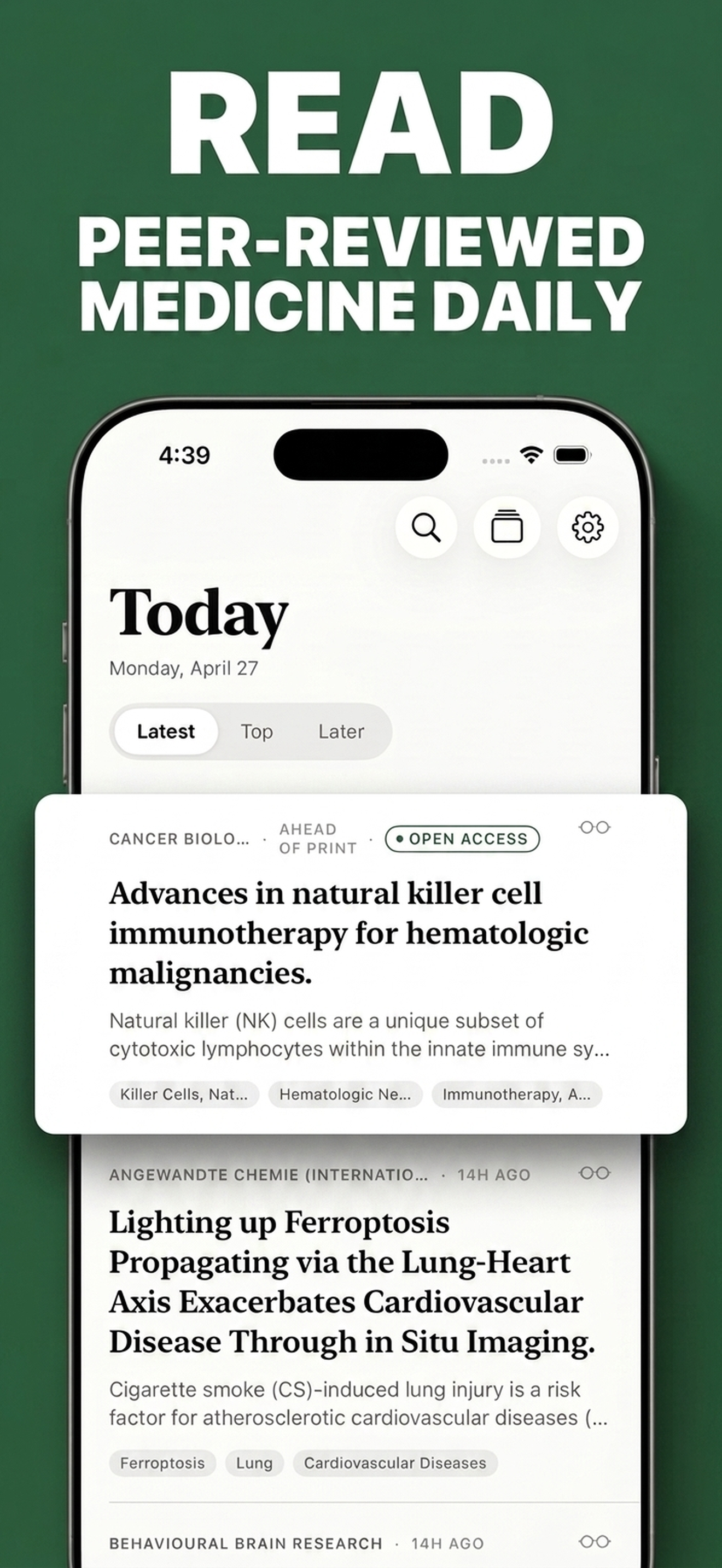
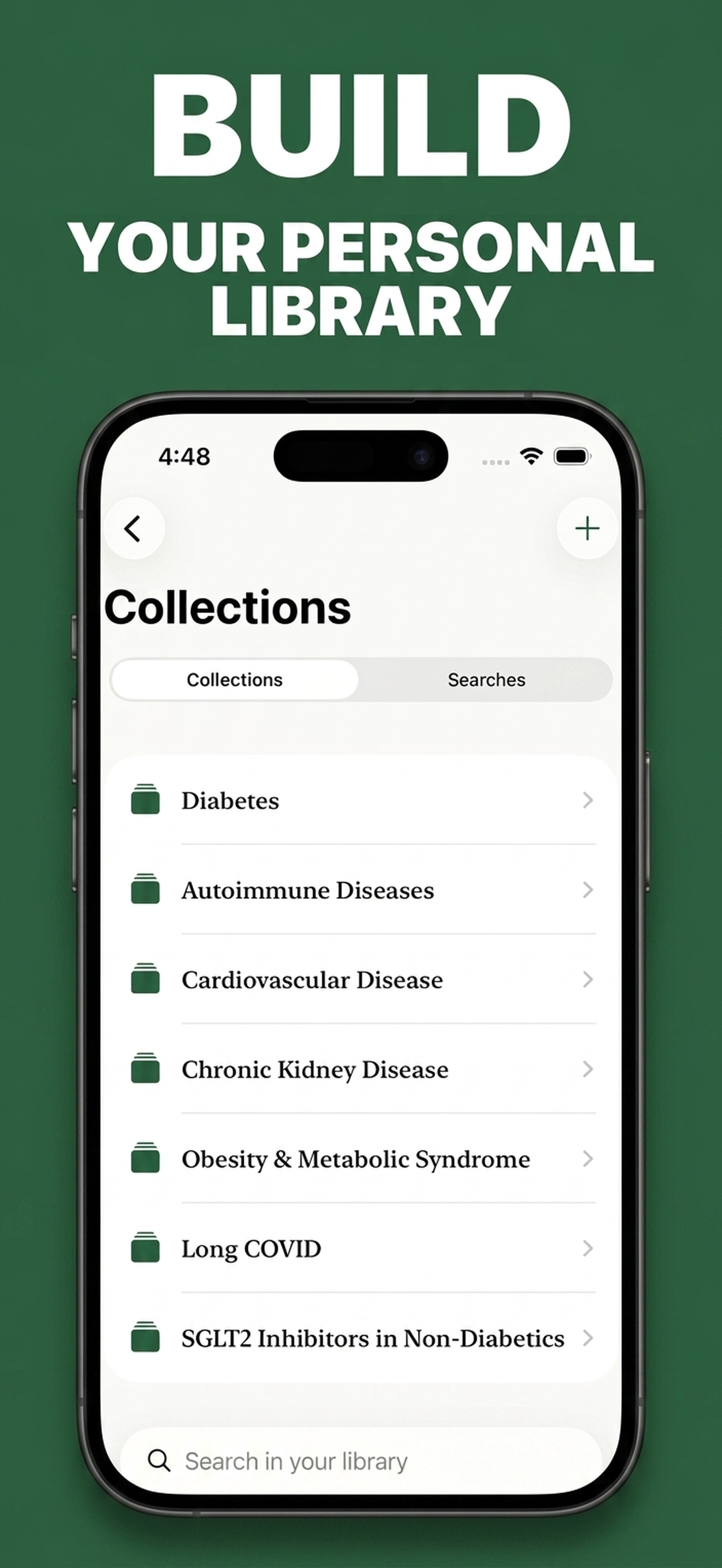
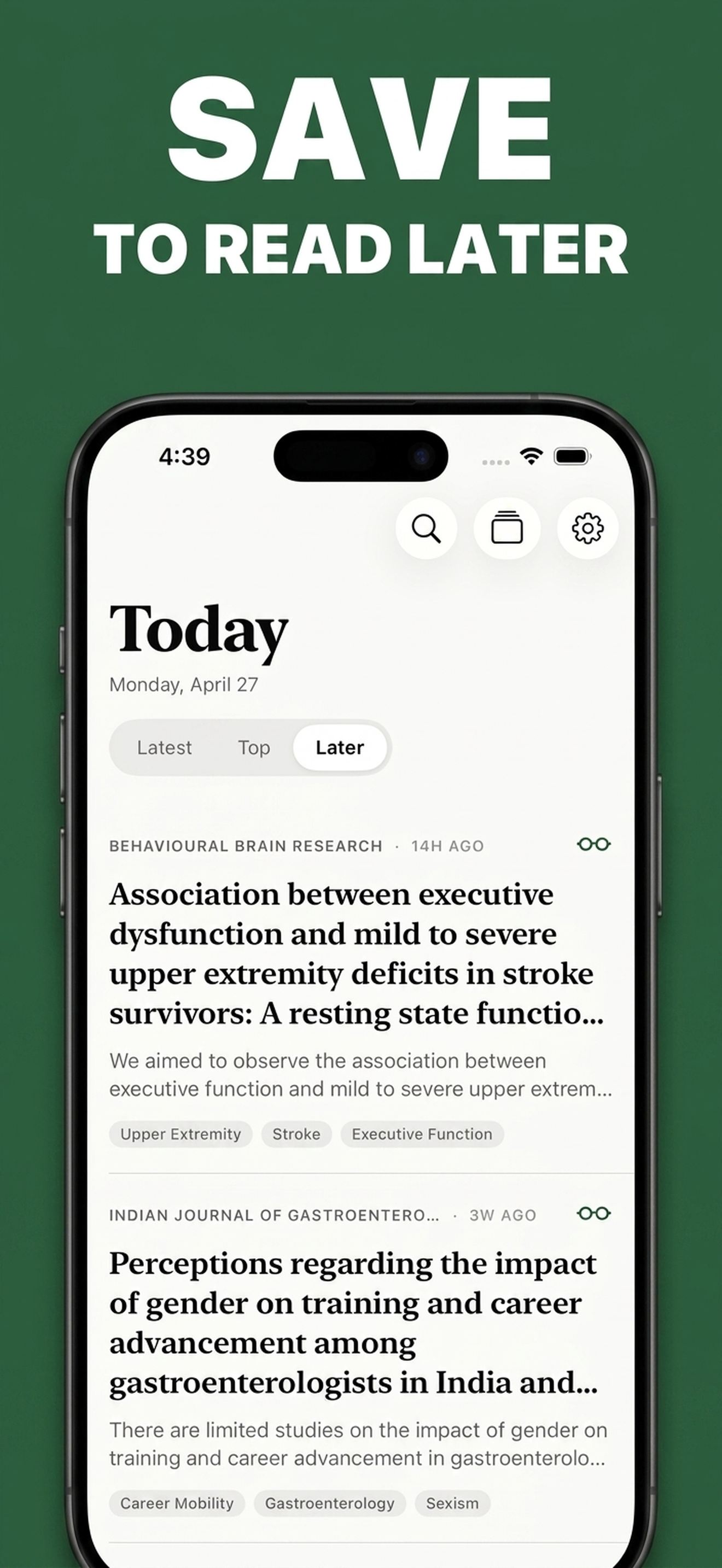
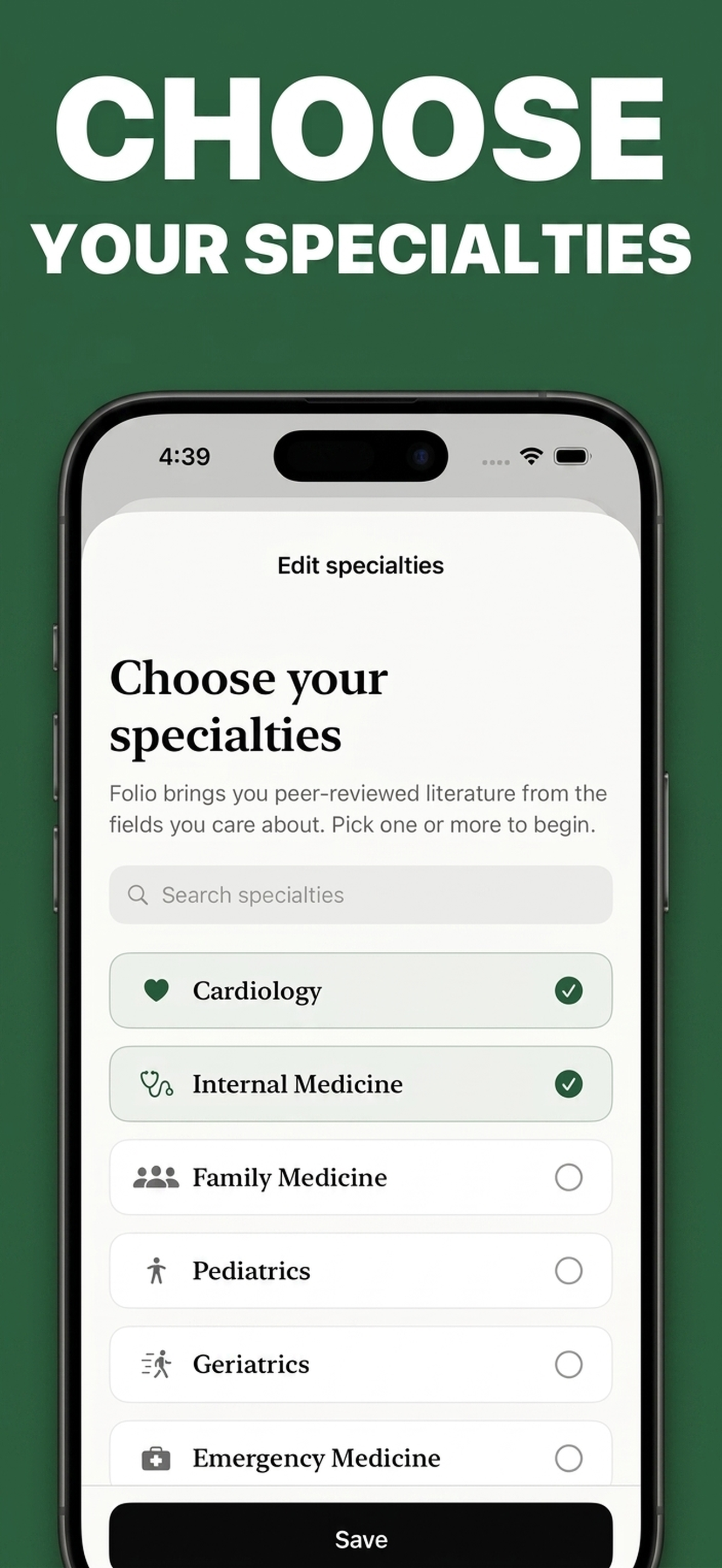
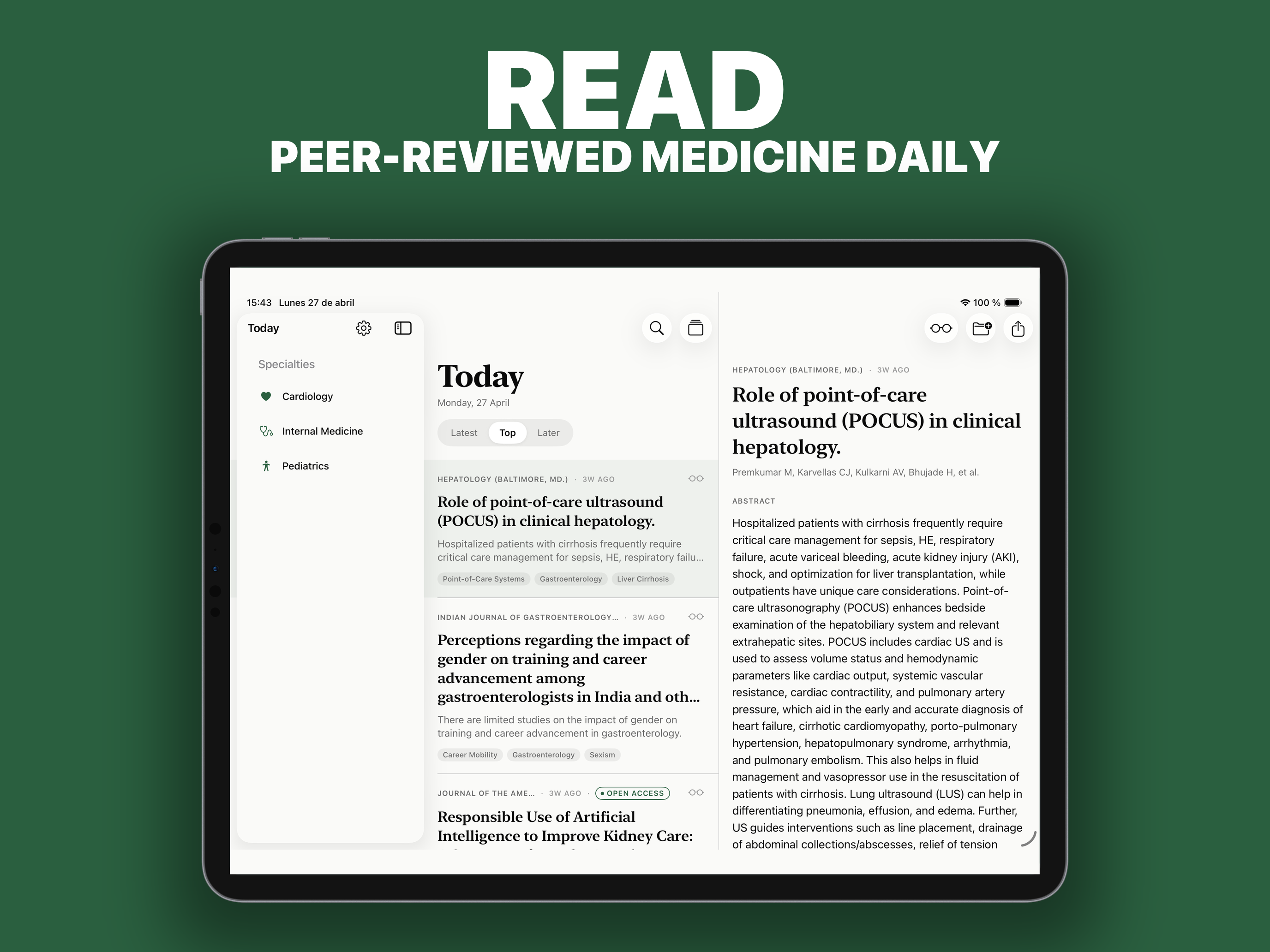
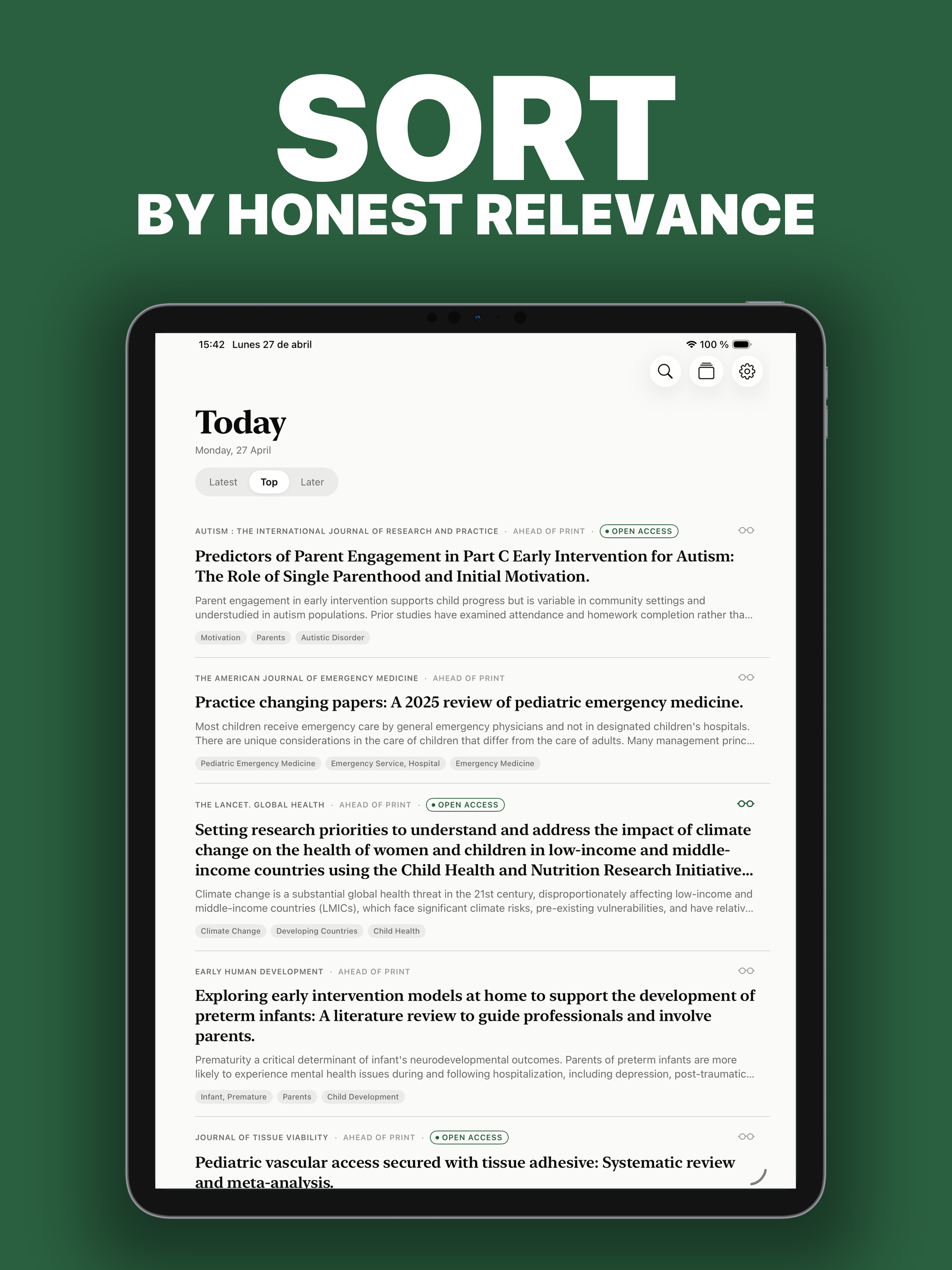
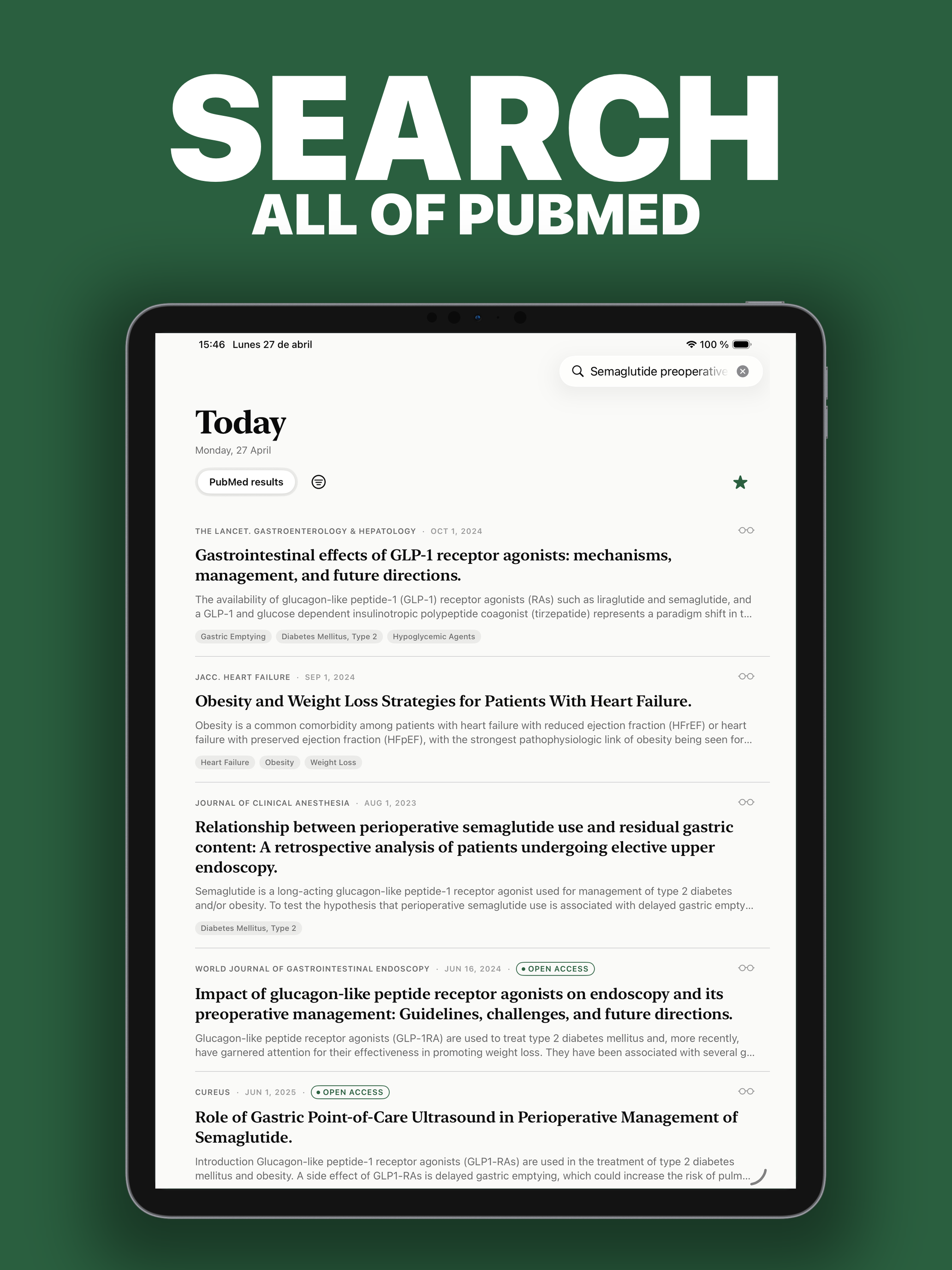
Folio is a peer-reviewed literature reader for physicians, trainees, and academic readers — built natively for iPhone and iPad in SwiftUI. Where most medical apps treat literature as a search engine result page, Folio treats it as a daily reading habit. Pick your specialties from 50 options — from Cardiology to Child Psychiatry — and Folio pulls fresh peer-reviewed papers from PubMed every day, the top fifty from each specialty, surfaced in a clean editorial feed. The result is something physicians have been asking for and never getting: a calm, well-typeset front page for the literature, the way a physician of fifty years ago might have flipped through the latest issue of NEJM or The Lancet on a Monday morning. No ads. No streaks. No badges. No infinite scroll. Just the papers that matter today, in a layout designed for reading, not for engagement metrics.
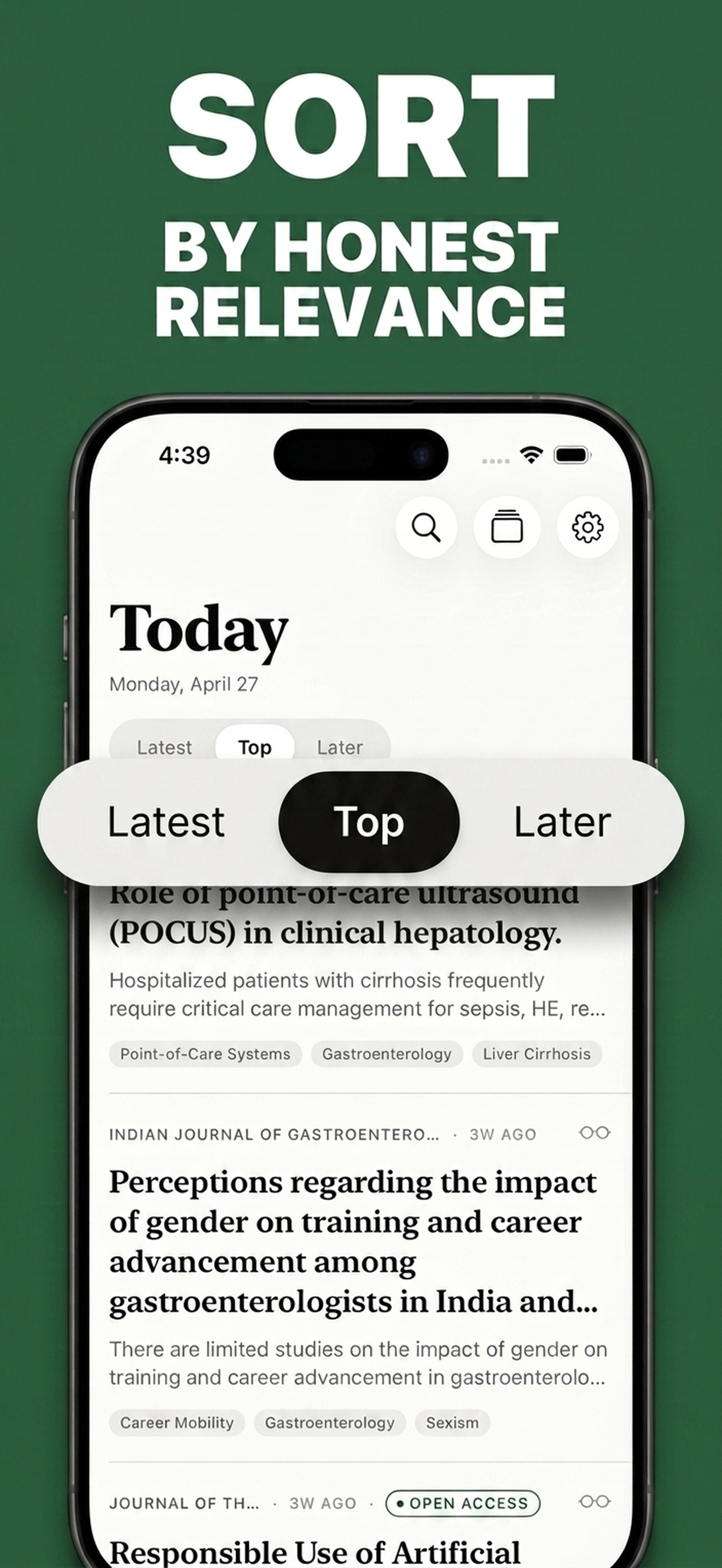
The relevance scoring is the part competitors don't touch honestly. Folio combines three open, citable inputs: the Relative Citation Ratio (RCR) from NIH iCite, which measures how often a paper is cited relative to other papers in its field; the SCImago Journal Rank (SJR), which captures the overall prestige of the journal; and recency, because a 2-year-old breakthrough is more useful in a daily reading routine than a 15-year-old citation classic. The formula is fully exposed in the app — no black boxes, no proprietary engagement signals, no algorithmic surfacing of whatever paper happens to be trending on social media that week. If a paper is on top of your feed today, it's because it has high citations in a high-rank journal and was published recently. That's it. The transparency is the wedge: physicians who care about evidence quality care about how their reading list gets ranked, and Folio is the first reader that lets them inspect the formula.
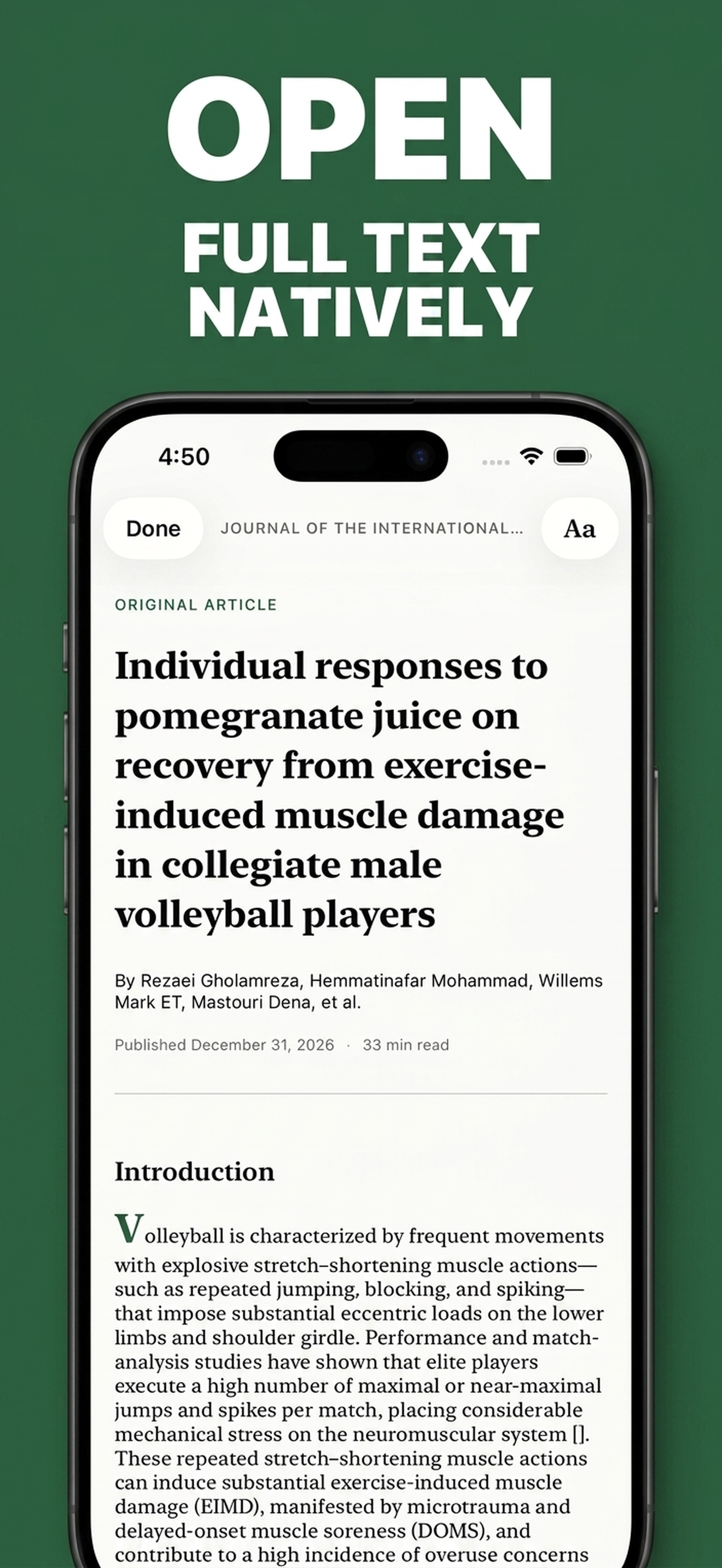
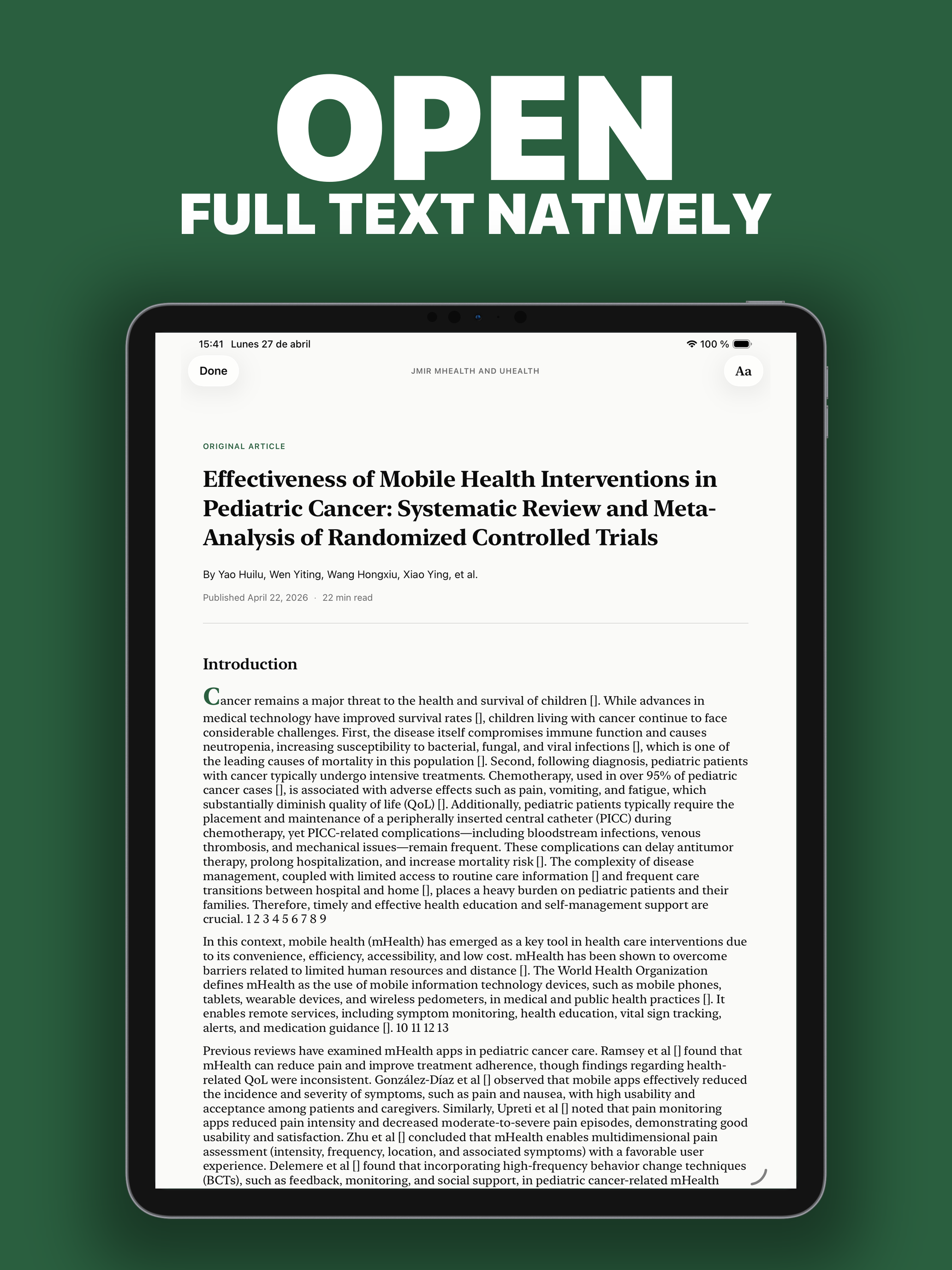
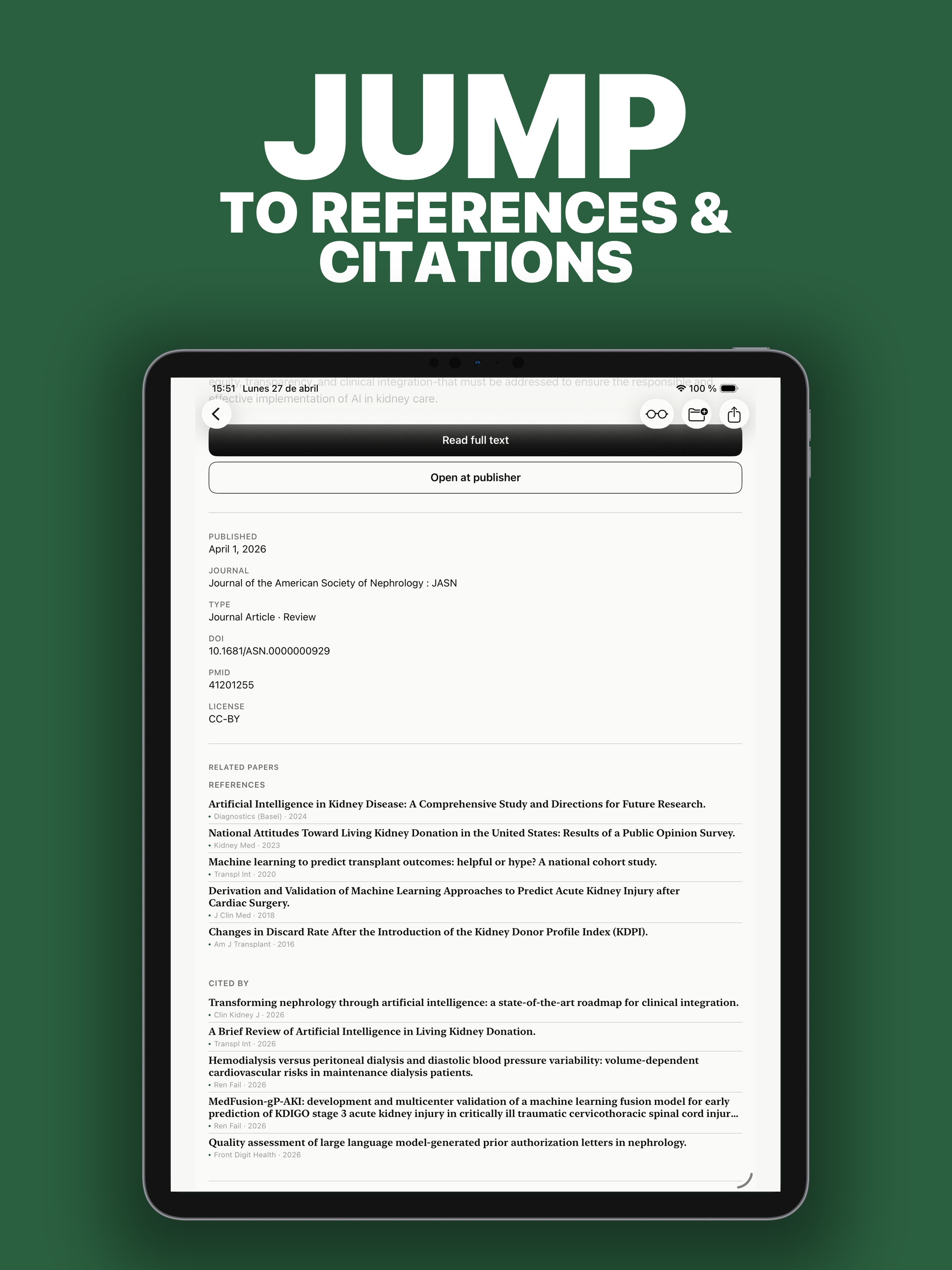
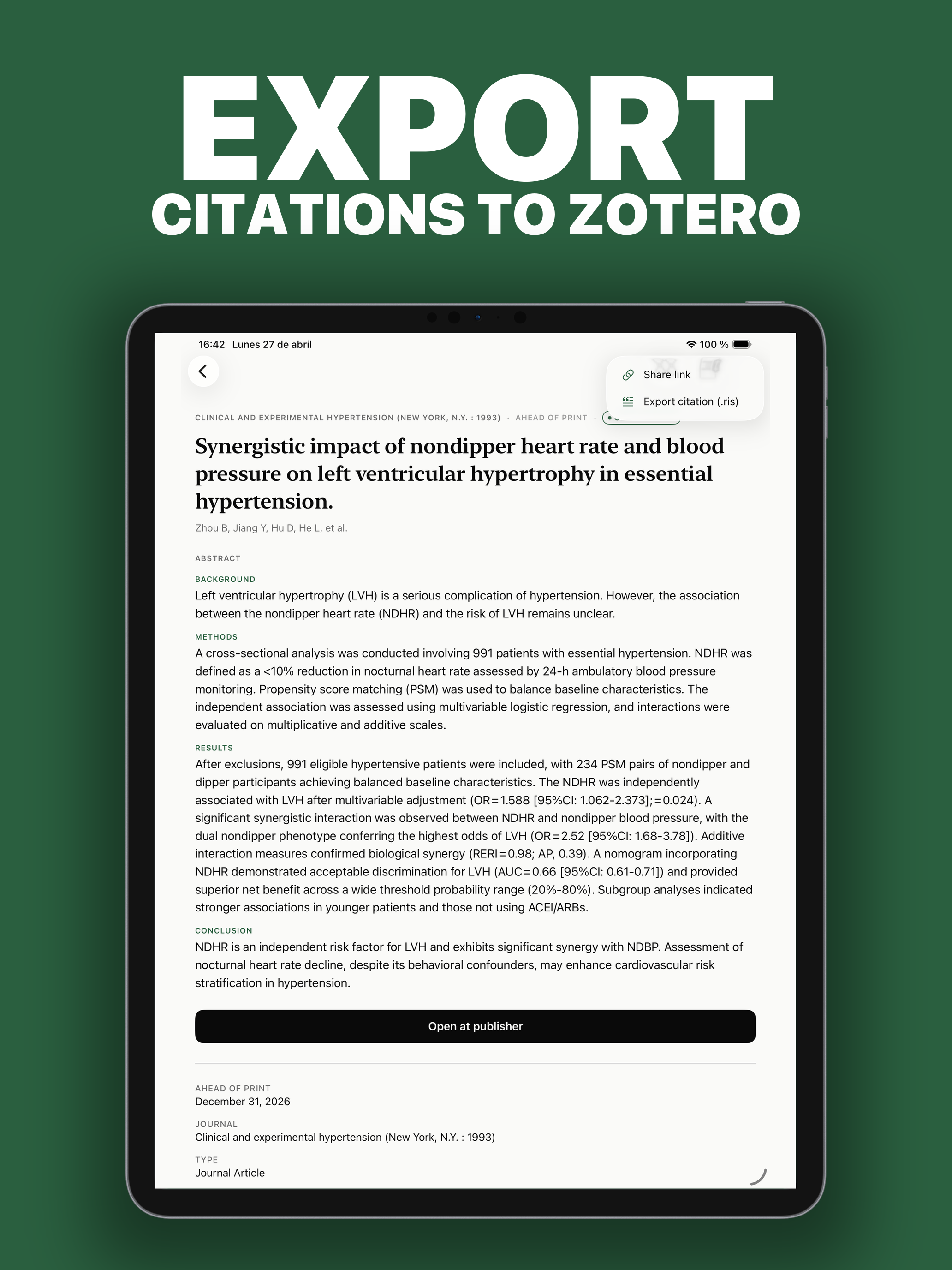
Open Access is treated as a first-class experience. Folio detects OA status across more than 40 million papers via Unpaywall — a small green dot tells you there's a free full text before you even tap. When the article is Open Access (CC-BY, CC-BY-NC, or CC0), Folio fetches the structured JATS XML from Europe PMC and renders it natively, with real typography. New York serif for the body text, SF Pro for the UI, hand-tuned for both light and dark mode, full Dynamic Type support. Not a stripped-down webview. Not a PDF that loads slowly. Real type, the way the editorial team at a journal would have laid it out if they'd built the iPhone reader themselves. References are interactive — every citation gets its own card with author, year, journal, and a one-tap jump to the cited paper if it's in PubMed. Cited By shows you who's referenced this paper since publication, also one tap away, with OA dots so you know which ones you can read in full. RIS export to Zotero, Mendeley, EndNote, and Papers takes a single tap.
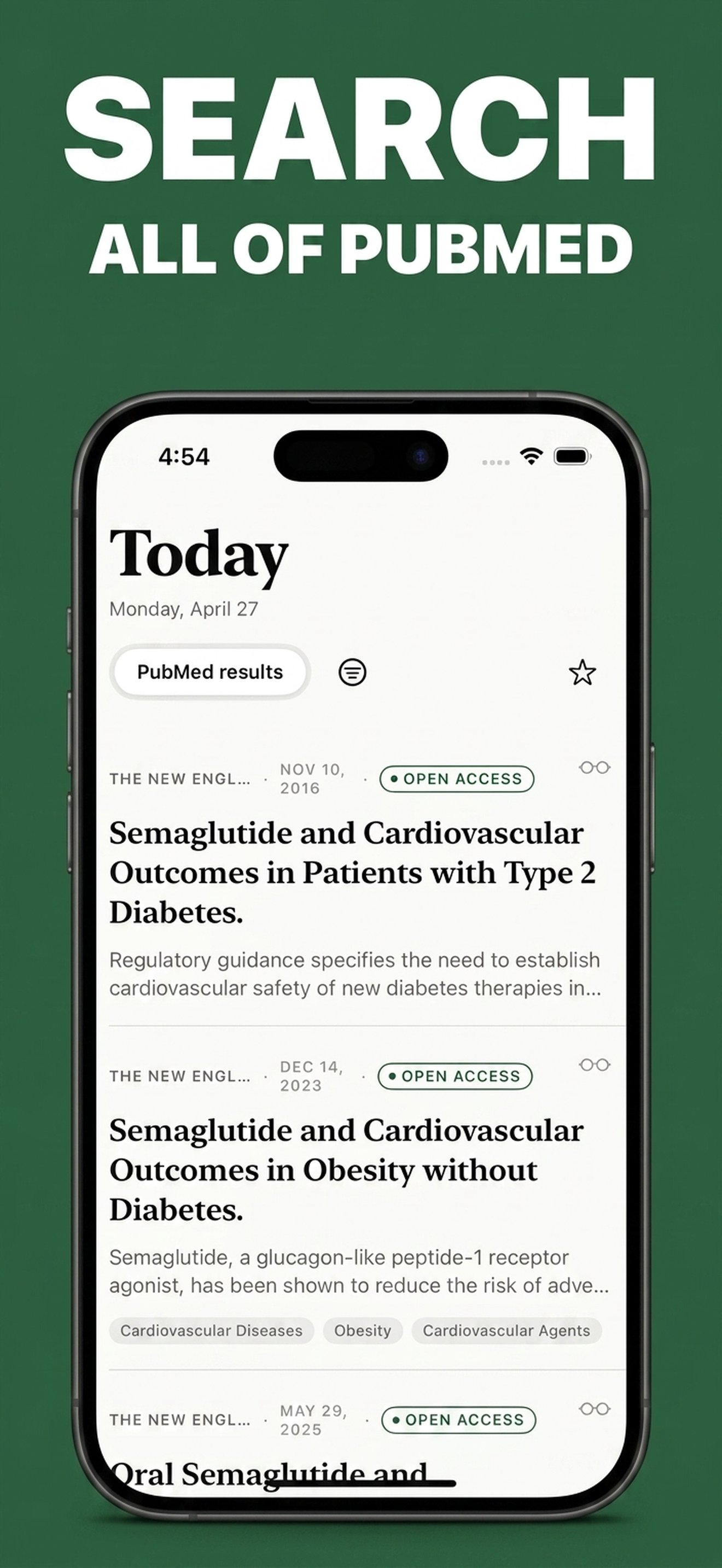
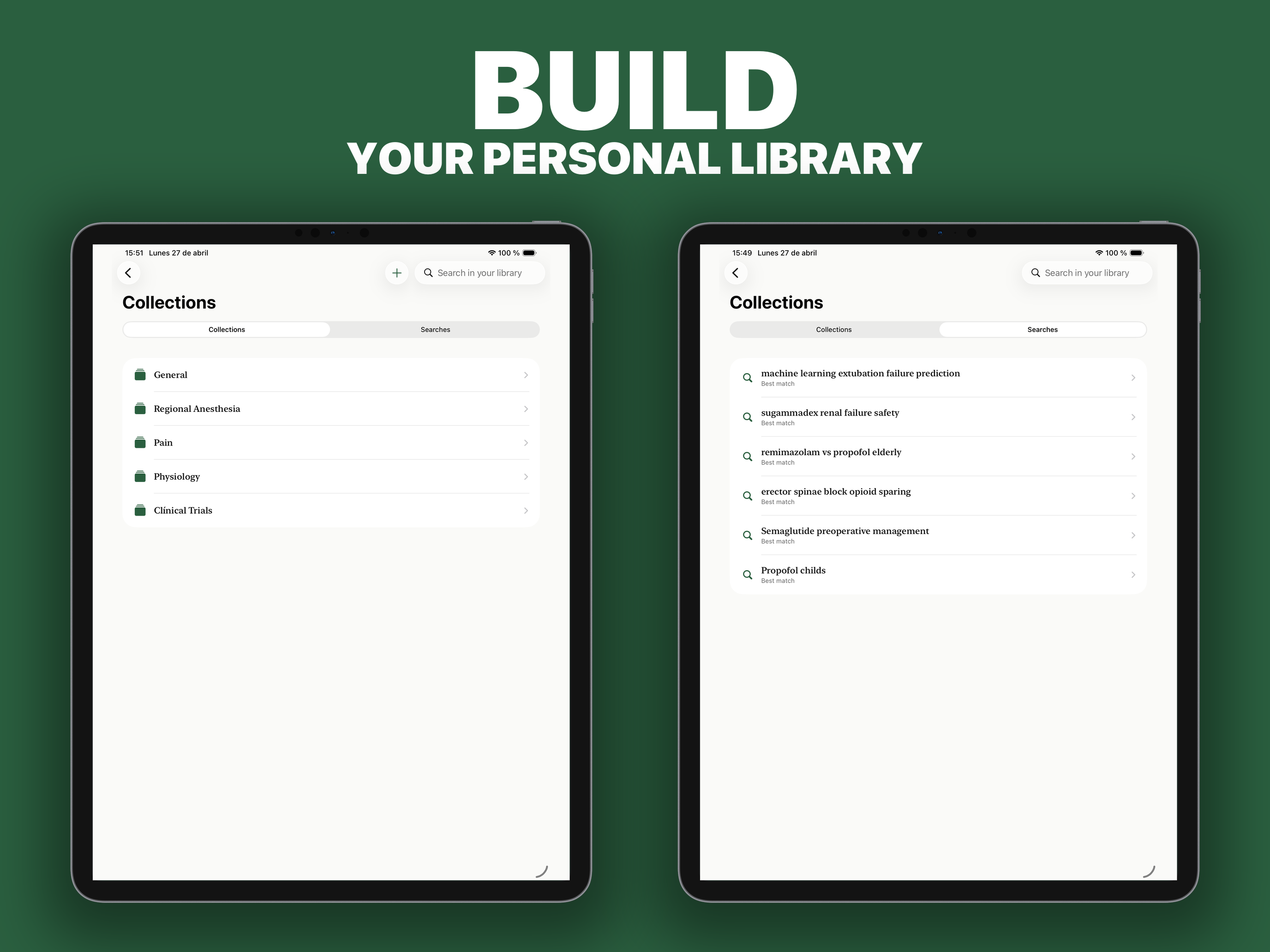
Privacy is not a marketing footnote in Folio — it's a structural design choice. There is no account. There is no sign-in. No analytics SDKs (no Firebase, no Amplitude, no Sentry). No advertising SDKs. No crash reporting that ships your stack traces to a third party. Your specialty list and your saved papers live on your device, not on a server. If you delete the app, that data is gone — there's nothing in the cloud to call back. This is unusual in 2026, especially in medical apps, where SDK bloat is the default. Folio uses one server: a Supabase instance that hosts the daily-refreshed paper metadata and serves it to every reader. Your device requests the day's papers; the server has no idea who you are. Article metadata comes from PubMed / MEDLINE (U.S. National Library of Medicine), citations from NIH iCite, OA status from Unpaywall, and full text from Europe PMC. All open scientific infrastructure, all credited inside the app. Folio is not affiliated with or endorsed by NIH, NLM, or any publisher. Folio is a reader for medical literature — it is not a medical device, it does not provide medical advice, diagnosis, or treatment. Always consult a qualified healthcare provider for clinical decisions.